 Alien Invasives
Black Locust (Robinia pseudoacacia)
04 October 2016
- Other names
-
False Acacia, Locust Tree, Yellow Locust (English)
Witakasia, Valsakasia (Afrikaans) - Invasive status
-
NEMBA Category 1b (proposed)
CARA 2002 Category 2 - Description
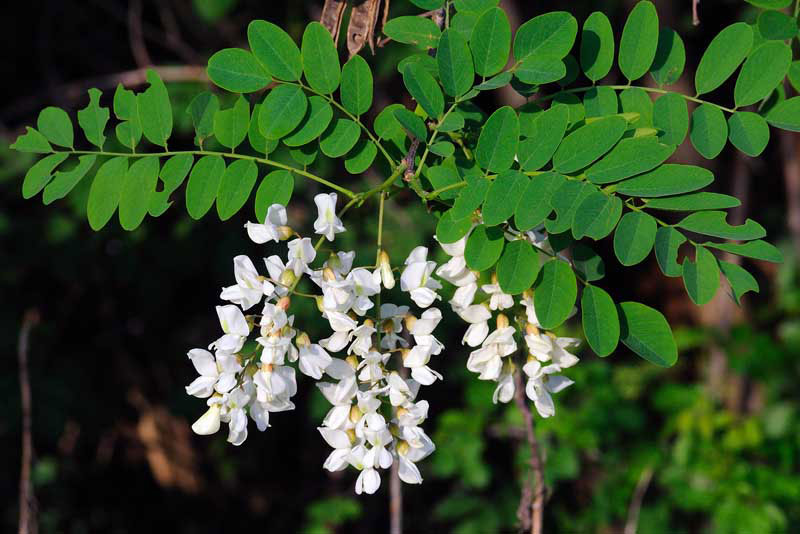
- A neat, deciduous tree normally up to 12 metres tall but in ideal conditions may reach 25 metres. Bark is dark brown and deeply furrowed. It suckers freely to create impenetrable thickets where the young stems and branchlets have nasty thorns. The small, bright green leaves become yellow in autumn. From September to November the trees are covered in white, fragrant flowers in drooping sprays followed by reddish-brown pods. The seeds, leaves and inner bark are poisonous.
- Originally from
- North America
- Where is it a problem?
- Throughout South Africa
- How does it spread?
- Seed dispersal and suckers
- Why is it a problem?
- Dense copses can form by suckering from the roots and can cover vast areas where they compete with and replace indigenous species. Along watercourses they restrict access to water by domestic and wild animals. They are also poisonous to humans and domestic livestock.
- Planting alternatives
- Ankle Thorn (Acacia robusta), Hook Thorn (Acacia caffra), Weeping Wattle (Peltophorum africanum)
- Uses
- Timber, fuel and ornamental
Please help...
Any donations would be greatly appreciated and are much needed to support these efforts. Please consider setting up a stop order with your bank for a regular monthly contribution rather than (or in addition to) a one-off donation. This would greatly assist us in budgeting and planning for the future.
Please EFT to the following account:
| Bank: | Nedbank |
| Branch name: Branch code: |
Morning Glen Branch 198 765 |
| Account Name: | Sandspruit Ullmann Park Association |
| Account Number: | 1014 852 641 |
| Reference: | Your name |
Any questions? Please contact us by clicking here.